

Erectile dysfunction is a common issue that can generate frustration and anxiety within a couple, but there are effective strategies to address it and, in many cases, overcome it.
Erectile dysfunction (ED), often also called impotence, consists of the persistent inability to achieve or maintain an erection sufficient for a satisfying sexual intercourse.
It is a very common condition, especially with advancing age: in Italy about 13% of adult men (over 3 million) suffer from erectile problems. Having an occasional episode of “failure” is normal and usually should not be a cause for concern (even though it often is, unfortunately worsening the situation).
However, when erection difficulties occur frequently, it is important not to ignore the problem and to consult an expert. ED can strongly impact self-esteem, generate stress, and create misunderstandings with one’s partner.
I wrote this article to help you distinguish between psychologically based erectile dysfunction and organic erectile dysfunction and to present 5 practical solutions to address it successfully. Together we will understand the causes and explore techniques, practical advice (such as the use of a cockring), the importance of couple dialogue, when to consult a specialist, and which medical options (drugs or procedures) exist.
In short — Erectile Dysfunction and Impotence
- Erectile dysfunction is very often psychogenic, not a physical malfunction.
- Morning erections and “on-and-off” functioning point to a mental cause.
- Anxiety, insecurity, and fear of failure are the main enemies of erection.
- Practical tools (cockring, exercises, medications) help, but do not replace psychological work.
- Talking with a mental coach, with your partner, and—if needed—with an andrologist is the most effective way to truly overcome it.
Table of Contents
Psychogenic vs Organic Erectile Dysfunction: understanding the difference
Erectile dysfunction can have psychogenic causes (i.e., linked to mental, emotional, or relational factors) or organic causes (due to medical or physiological conditions). It’s essential that first and foremost you manage to recognize the predominant origin as objectively as possible, because the approach to treatment changes. Here are the typical characteristics of the two forms:
- Psychogenic erectile dysfunction:
- It usually appears suddenly during a specific period or in particular situations (for example with a new partner, under stress, or after a specific event), while on other occasions erectile function is normal.
- Often the problem is situational: for example, you may be able to have a satisfying erection during masturbation, but not during intercourse with a partner.
- Similarly, the presence of regular spontaneous morning or nighttime erections indicates that the physical mechanisms of erection are intact, suggesting a predominantly mental/emotional cause.
- This does not mean what you’re experiencing isn’t real. Factors such as performance anxiety, insecurities, psychological stress, or couple tension come into play. A man can enter a vicious cycle in which fear of failing generates anxiety, and anxiety in turn blocks the erection.
- Organic erectile dysfunction:
- It tends to have a gradual and progressive course.
- It often affects older men or those with risk factors (diabetes, hypertension, cardiovascular problems, hormonal imbalances, neurological damage, etc.).
- In these cases, the erectile difficulty is constant in every situation: the man struggles to obtain or maintain an erection both with a partner and alone.
- An indicative element is the reduction or disappearance of spontaneous morning erections, which may suggest an underlying physiological problem (e.g., circulatory or neurological) at the base.
- Organic ED often presents as a progressive worsening of rigidity and the ability to maintain an erection over time.
- It may also be associated with other symptoms (reduced libido, weak ejaculation, fatigue, etc.) linked to underlying conditions, for example testosterone deficiency in cases of hypogonadism.
Note: In many cases erectile dysfunction is not “all psychological” or “all physical,” but arises from the interaction of both components. For example, an initial organic issue (which may also be temporary) can generate deep anxiety and discomfort, further worsening the situation. It’s also important to remember that ED is not a disease in itself, but a symptom that can be a warning sign of other conditions: that’s why it should always be taken seriously and addressed thoroughly.



3 Techniques to understand the nature of your erection problems
How can a man understand whether his erectile difficulty is more likely psychological or organic in origin? Here are some simple observations and “self-tests” that can help you get an idea (while not replacing a medical evaluation):
Observe your morning erections
When you wake up, do you still notice normal spontaneous erections? In general, the presence of morning erections (or solid erections during sleep/masturbation) is a sign that the penis works physically: this points toward a psychological or situational cause of ED. Conversely, the persistent absence of morning erections may indicate an underlying organic problem, such as insufficient blood perfusion or neurological damage.
💡 What it means: for the moment, forget your impressions about erection quality and duration. At this stage you only need to be objective from a biological point of view.
Compare different situations
Are you able to have a satisfying erection on your own, for example during masturbation or with erotic stimulation based on a fantasy?
If yes, but then things go wrong in the presence of a partner—or you get a strong erection but then start thinking about its quality and begin to “lose it”—performance anxiety, emotions, or couple dynamics are very likely involved (therefore a psychogenic component).
If instead you cannot obtain or maintain an erection in any circumstance (neither alone nor with someone), a physical cause is more likely to be present and should be identified. Similarly, if the problem occurs only with a specific partner but not with others, it may be a situational psychological block.
💡 And how is your libido? Note that no man can have an erection if his emotional state is not psychologically—and therefore neurobiologically—sexually aroused. If your worries are louder than your desire to enjoy yourself, you will most likely not be able to achieve an erection.
Analyze how and when the problem started
Try to be objective: do you remember whether the erectile difficulty appeared suddenly during a specific period (perhaps after a stressful event, a strong emotional impact, or a new sexual relationship)?
An acute onset linked to specific moments is typical of psychogenic ED. If instead the erectile deficit had a gradual onset and progressively worsened over months or years, without clear periods of improvement, this is more indicative of an organic or medical cause.
💡 Important note: the type of difficulty also matters: the inability to achieve any erection at all (even partial) points toward physical causes, while those who get an initial erection that then “disappears” during intercourse may be victims of anxiety or a drop in mental focus.
These simple “tests” can guide you effectively, because if you are able to recognize that your problem is psychological, you can face it and overcome it successfully with a Mental Coach, a sexologist, or a psychotherapist.
If the problem persists, meeting with a physician is certainly a great idea. Through an interview, physical examination, and possible tests (blood work, penile Doppler ultrasound, nocturnal rigidity tests such as Rigiscan, etc.), the specialist will be able to clearly determine whether the causes of the dysfunction are physiological or psychological.



How to treat psychogenic erectile dysfunction
When erectile dysfunction has a strong psychological component, working on the mind and emotions is the key to resolving it. And I’m telling you this as a man who, at the time of writing this article, is 36 years old and has already experienced two periods of this kind of difficulty.
Performance anxiety, fear of failure, stress, and insecurities block the natural process of erection, even in young and otherwise healthy people. In these cases, the goal is to break the vicious cycle between negative thoughts and physical reactions: the more you worry about “not getting hard,” the more anxiety grows, and the harder it becomes to achieve an erection—confirming your initial fears.
That said, I assure you that the best thing you can do is talk about it with another man—especially one who is qualified to help you with this issue. In the meantime, here are some useful mental and coaching strategies to overcome these fears:
- Normalize the episode: remember that a moment of difficulty can happen to anyone, and is often temporary. Make an effort not to identify with the “failure” or to magnify it: what you’re going through does not define your masculinity or personal value.
- Reduce mental pressure and egocentrism: don’t experience sex as a “performance exam” where something is expected of you. You are not the center of the world—and the center of your world should perhaps be your partner’s pleasure, which is not achieved only through your erect penis.
- Rediscover intimacy beyond penetrative sex: don’t obsessively fixate on having to achieve a perfect erection and penetration at all costs. There are many other satisfying forms of intimacy (foreplay, kissing, touching, as well as erotic fantasies and fetishes) that bring pleasure to you and your partner. By removing the obsession with performance, erections often return spontaneously when you’re more relaxed.
- Face the situation gradually: completely avoiding sex for fear of failing is counterproductive. It’s better to maintain intimacy, perhaps initially without aiming straight for penetration, until you regain confidence. Every small positive experience rebuilds your sense of security and weakens your fears. Have you considered asking your partner about their fantasies and exploring a different kind of intimacy together for a while?
Beyond this shift in mental attitude, it can be very helpful to learn relaxation and self-regulation techniques to use both in daily life to reduce overall stress and immediately before or during sexual activity to manage situational anxiety. Many specialists—including myself—recommend, for example:
- Meditation and mindfulness: meditation practices (even simple deep breathing or repeating a mantra) help calm the mind and develop greater awareness of the body. Sexual mindfulness, in particular, teaches you to focus on the pleasurable sensations of the present moment, setting aside negative thoughts and fear of judgment. This increases the sense of control and confidence in your abilities. You can also explore this together with a coach specialized in sexuality, like me.
- Autogenic training and muscle relaxation: these are well-established psychophysical techniques that teach you how to voluntarily induce a state of relaxation in both body and mind. Performing relaxation exercises before an intimate encounter (or even during, if you feel anxiety rising) can prevent the emotional “freeze” response that blocks erection.
- Positive visualization: a mental coach can guide you through imagery exercises in which you imagine yourself experiencing intimate situations with success and serenity. This helps “re-educate” the brain to respond calmly, replacing catastrophic fantasies (“it will go badly, I’ll fail, I’m not getting hard…”) with positive and realistic scenarios.
In some cases—especially when insecurities are deeply rooted or linked to trauma and unresolved conflicts—professional support may be necessary. A specialized coach or psychotherapist can help you with targeted therapies (such as Integrated Masters & Johnson Therapy in sexology, or cognitive-behavioral approaches) to restructure dysfunctional thoughts, improve sexual self-esteem, and learn specific techniques to manage performance anxiety.
Couples therapy may also be appropriate if erectile difficulties intertwine with misunderstandings or tensions within the relationship. The important thing to know is that psychogenic impotence can be overcome: by addressing fears and changing certain mental attitudes, most men manage to regain a calm and fulfilling sexuality.
How to achieve a stronger and more satisfying erection
To immediately improve your ability to maintain an erection, there are also practical solutions of a mechanical or behavioral nature. When I talk about this option with my clients, I’m often surprised by how few men in Italy actually know about the cockring (penis ring). One of these solutions—simple yet often effective—is the use of the penis ring, also known by the English term cockring. It is an elastic ring (made of silicone or medical-grade latex) applied at the base of the penis once an erection has been achieved, even if only partial (though I personally also use it when the penis is still flaccid).
Penis Ring or Cockring
Its function is to limit venous outflow: by applying gentle pressure around the penis, the ring keeps blood inside the corpora cavernosa, making the erection firmer and longer-lasting.
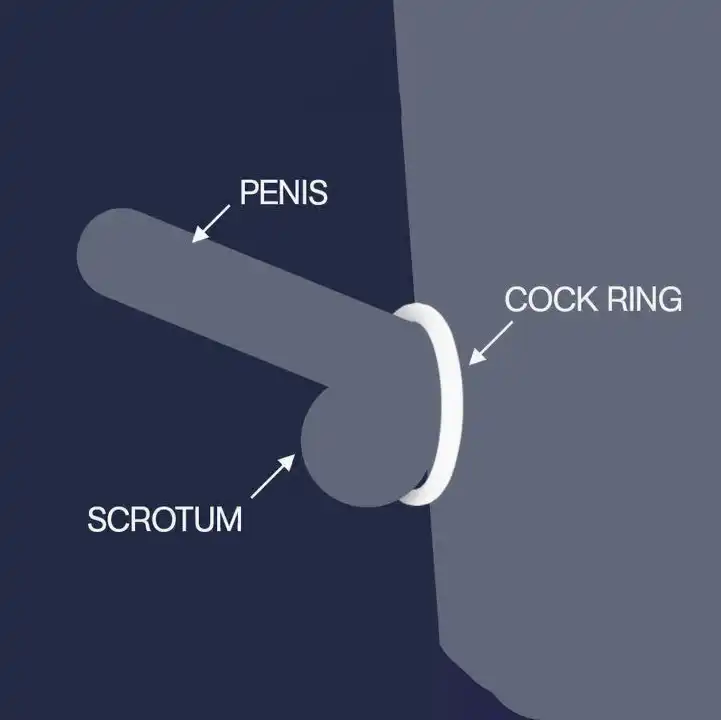
The cockring is a valid symptomatic aid for those who can achieve an erection but struggle to maintain it for long, or for those who want to enjoy a stronger and more intense erection. Some men also use it to increase sensations and slightly delay ejaculation, since the mechanical compression prolongs the plateau phase of intercourse.
There are various types available on the market (simple, vibrating, different sizes); it is advisable to start with soft, elastic models, which are easier to put on.
Pelvic Floor Training
Another useful physical tool, especially in cases of mild erectile dysfunction, is pelvic floor exercises (the well-known male Kegels). These are voluntary contraction exercises of the perineal muscles (those involved in urinary flow and erection) which, if practiced regularly, can strengthen the erectile response. Clinical studies have found improvements in erectile function in about one out of two men with ED who perform these exercises correctly.
In particular, a 2019 study reported improvement rates ranging from 24% to 46% depending on initial severity. A stronger pelvic floor helps maintain rigidity by increasing local blood pressure and also improves the perception of sensations during intercourse.
You can learn Kegels on your own (by simulating the interruption of urinary flow, contracting and releasing the muscles in repeated daily sessions) or with the help of a physiotherapist specialized in perineal rehabilitation. This type of training has the advantage of benefiting not only erections but also urinary continence and ejaculatory control, without side effects. Keep in mind, however, that it is not a miracle cure for severe ED—it works best as a natural adjunct to be combined with other therapies.
Lifestyle changes
Among the “physical” recommendations are also all those habits that improve overall health and, consequently, erectile function. The penis is a vascular organ: what benefits the heart and blood vessels also benefits erections. It has been shown, for example, that sedentary men have more erection problems, while engaging in regular aerobic exercise (running, swimming, or even just daily brisk walking) helps prevent and counteract them.
Following a balanced diet (e.g., the Mediterranean style, rich in vegetables, fruit, fish, and olive oil) keeps arteries healthy and supports good hormonal levels, reducing vascular risk factors.
By contrast, smoking, excessive alcohol consumption, and being overweight are enemies of erection: smoking damages blood vessels, excess alcohol depresses the nervous system and disrupts testosterone levels, while obesity is often associated with diabetes and circulatory problems that hinder erectile function.
Therefore, a healthy lifestyle is an integral part of the solution: improving physical fitness and metabolic health not only benefits sexual performance but also increases energy and self-confidence, creating a virtuous body–mind cycle (and a Mental Coach can provide concrete support in achieving this balance of well-being).
Open dialogue with your partner, a friend, or a professional
As men, we often tend to experience these difficulties in solitude, feeling shame, deep demoralization, or fearing the judgment of a partner, friends, or others; on the other hand, the best way to face any problem—especially sexual issues that make us feel lost and alone—is dialogue, which marks the beginning of healing.
This is also true within a couple: a partner may misunderstand the situation, perhaps thinking they are no longer desired or are the cause of the problem.
Speaking openly about what is happening is instead the best way to eliminate misunderstandings and reduce emotional tension. Honest and respectful communication allows the couple to work as a team to overcome the obstacle, even strengthening mutual trust and intimacy.
In some cases, there may be no partner—or you may prefer not to share this temporary situation with them, but rather focus on finding a solution. In that case, talking to a Mental Coach is particularly useful, because unlike friends, family members, or partners, the Mental Coach is a professional and your relationship is limited to achieving a solution, not sharing a future together.
So, don’t be afraid to seek outside help if necessary. Couples therapy or sex therapy with a professional can offer a safe space to discuss the emotions related to ED and learn techniques to rediscover intimacy without pressure.
The important thing is not to live the situation as a taboo: erectile dysfunction is very common, often temporary, and with the right approach it can be overcome.
When to consult a specialist for sexual problems
From a medical standpoint, erectile dysfunction is defined as an erection problem that persists for at least 3 consecutive months. If you find yourself in this situation, or if erection difficulties recur frequently enough to cause concern, it’s time to consult a specialist.
Many men hesitate to talk about it with a doctor out of embarrassment, but it’s important to understand that professionals (andrologists, urologists, sexologists, sexual therapists) deal with these issues every day and can truly help you resolve them. There is nothing to be ashamed of: on the contrary, taking the initiative to seek help is an act of courage and respect for your own health and that of your relationship.
Who should you see? Generally, the reference specialist for ED is the andrologist (or a urologist with andrological expertise), i.e., a physician specialized in male reproductive health. They can perform a complete diagnostic assessment: collecting your medical and sexual history, examining the genitals for any abnormalities, and prescribing targeted tests (hormonal profile, blood glucose, penile Doppler ultrasound, etc.).
At the same time, it may be useful to involve a clinical sexologist (a physician or a Mental Coach specialized in sexology), especially if a significant psychological component is suspected. Often, a multidisciplinary approach (medical + psychological) is the best path to comprehensive therapy. Once the case has been evaluated, the professional will guide you toward the most suitable solutions (for example medical therapy, psychological counseling, or—as often happens—both in parallel).
Medical treatments: drugs and surgical options
What should you do when it is established that this is true erectile dysfunction, with a specific biological cause? First of all, this diagnosis can only be made by a physician, so here we are discussing what to expect in terms of proposed solutions and what you can ask your doctor.
Over the past 20–25 years, there has been a small revolution in the treatment of erectile dysfunction thanks to the introduction of specific oral medications. The most well-known are PDE-5 inhibitors (phosphodiesterase type 5 inhibitors), a class of molecules that includes sildenafil, vardenafil, tadalafil, and more recently avanafil. However, many other options exist, including surgery.
- Oral medications (first-line treatment – PDE5 inhibitors)
Viagra / Levitra / Cialis / Spedra: these help erections by increasing blood flow in the presence of sexual stimulation. They are used “on demand” (or in some cases continuously) only after medical evaluation. Be careful: if the cause of impotence is psychogenic, these drugs may provide no benefit at all (or may only produce a placebo effect). - Local therapies (if pills are not sufficient or cannot be used)
- Intracavernosal injections (e.g., alprostadil): induce erections with high effectiveness; require specialist instruction.
- Intra-urethral alprostadil: local application, an alternative to injections.
- Mechanical devices
Vacuum pump (vacuum device): draws blood into the penis and, with a constriction ring at the base, helps maintain the erection. - Surgical solution (last resort)
Penile prosthesis: a definitive option when other therapies fail or are contraindicated; to be evaluated together with an andrologist. - Golden rule
No do-it-yourself: the choice depends on overall health, medications taken, and the causes of ED. Always schedule a visit with an andrologist/urologist.
Quick definitions
- Erectile dysfunction
- Persistent inability to obtain or maintain an erection sufficient for satisfactory sexual intercourse.
- Psychogenic erectile dysfunction
- Form of ED caused primarily by mental and emotional factors such as anxiety, stress, insecurity, or relational conflicts.
- Organic erectile dysfunction
- Form of ED due to physical causes (vascular, hormonal, neurological, or pharmacological).
- Performance anxiety
- State of mental hypercontrol that inhibits the physiological mechanisms of erection.
- Cockring
- Penis ring that limits venous outflow, helping to maintain an erection for longer.
- Sexual mental coaching
- A work path focused on beliefs, emotions, and the relationship with the body and sexuality.
Frequently Asked Questions and practical answers about Erectile Dysfunction
How common is Erectile Dysfunction?
The incidence of ED increases with age: it is estimated that about half of men between 40 and 70 years old report some degree of erectile difficulty (source), and about 10% in that age range suffer from severe ED.
Below the age of 40, clinically significant ED is less common (affecting 5–10% of men under 40) and is more often linked to psychogenic causes (anxiety, stress, substance use, relational conflicts).
After 50–60 years of age, organic or mixed causes tend to prevail (source) (hormonal decline, vascular or neurological conditions, medication side effects, etc.).
At any age, however, effective solutions exist: the first step is recognizing the nature of the disorder in order to intervene correctly.
How to use a cockring safely
A cockring should be used with common sense to avoid unwanted effects. Do not wear it for more than 20–30 consecutive minutes, and avoid sleeping with it on, as prolonged use can excessively restrict blood circulation.
If you experience pain, numbness, or a bluish color of the penis during use, remove it immediately. It’s good practice to apply a bit of lubricant to the ring before putting it on, so it slides easily without friction.
Finally, avoid improvised or overly tight rings (metal, cords, etc.): choose products made of medical-grade silicone and follow the manufacturer’s instructions. When used correctly, a cockring offers a simple, drug-free way to improve erection maintenance.
How to talk to your partner about impotence
Starting this conversation on such a delicate topic is certainly not easy. Here are some practical tips to improve communication with your partner about ED:
Choose the right moment: address the topic during a calm moment, away from attempts at intercourse. Discussing erection issues immediately after a difficult episode can be emotionally explosive. It’s better to talk about it with a clear head, perhaps during a moment of affectionate closeness that is not sexual.
Use tact and honesty: express how you feel without blaming the other person. For example, instead of saying “You make me feel insecure”, try “I feel insecure when it happens… and I’m afraid of disappointing you”. This way you share your emotional state without triggering guilt or defensiveness. Acknowledge if something in the couple dynamic puts pressure on you, but emphasize that you want to work together to solve it, without assigning blame.
Listen to your partner and involve them: after speaking, give the other person space to express their thoughts and fears as well. Often, your partner may reassure you that they don’t question your masculinity, or admit that they too felt at fault. Maintain empathetic listening, without interrupting or minimizing each other’s emotions.
Facing these vulnerabilities together can greatly strengthen intimacy.
When is it “necessary” to consult a doctor?
Beyond how long the problem has persisted, there are situations in which you should absolutely consult a doctor:
Presence of medical conditions or risk factors: if you have diabetes, hypertension, heart disease, or other chronic illnesses, or if you take medications that may affect sexual function, erection problems could be linked to these conditions. In such cases it’s essential to speak with a doctor, both to treat ED and because it may be an early warning sign of inadequate control of the underlying condition.
For example, ED can be an early indicator of atherosclerosis or metabolic syndrome, preceding cardiovascular events by years. An andrologist, together with your primary care physician, can thoroughly assess your overall health (cardiac, hormonal, metabolic profile) and help you correct risk factors—often improving erections as well.
Impact on quality of life: if erectile difficulties are causing significant psychological distress, depression, generalized anxiety, or are compromising your relationship, don’t wait. In these cases specialist intervention is doubly useful, as it addresses both physical and emotional aspects through a 360-degree therapeutic path.
Diagnostic doubts: if you can’t tell whether your issue is psychological or physical, or if you have associated sexual symptoms (low desire, premature or delayed ejaculation, pain, penile curvature, etc.), an andrological evaluation is advisable. Sometimes a specific and treatable cause emerges (e.g., testosterone deficiency, early Peyronie’s disease, medication side effects).
When “DIY remedies” are not enough: if you’ve already tried lifestyle changes, stress reduction, supplements, or basic advice without noticeable results, it’s time to move to the next level and consult a doctor. Waiting longer only prolongs frustration.
Why can’t I maintain an erection?
In most cases it’s not a physical problem, but performance anxiety, stress, or mental hypercontrol. When the body enters “alarm mode,” the erection shuts down.
What should I do if I have erection problems?
The first step is to understand whether the issue is psychological or organic. If you have morning erections or erections when alone, it’s very likely psychogenic and should be addressed mentally, not only physically.
How can I improve erections naturally?
By reducing stress and mental pressure, improving sleep and physical activity, training the pelvic floor, and letting go of performance obsession. The mind comes before the penis.
How can I get hard immediately?
In the short term, deep breathing, slowing down, and shifting focus from performance to sensations can help. Tools like a cockring may help, but they don’t resolve the root cause.
Erection problems at 50 or 60: is it normal?
It’s common, but not inevitable. It’s often a combination of physical and psychological factors. Even at 50–60, the mental component plays a huge role.
What really helps erections?
Feeling safe, desired, and relaxed. Confidence, open dialogue with your partner, and working through emotional blocks help more than most people think.
Do natural remedies for erections work?
Only if they are part of a broader path. No natural remedy works if the mind is in a state of alert or fear.
Can erectile dysfunction really be cured?
Yes, in most cases. But not through shortcuts. It is resolved by working on mind, body, and relationship, not just by taking a pill.


Comments and Questions
0 Comments